
Last month, the Culture Secretary, Lisa Nandy, confirmed that entry to England’s national museums will remain free for everyone. The announcement ended speculation that overseas visitors might be charged and reaffirmed a policy which will reach its 25th anniversary later this year. Sir Gabriele Finaldi, Director of the National Gallery, described free entry as one of the UK’s greatest cultural assets, enabling millions of people to visit, enjoy and learn.
I wrote earlier this year about what it would really mean to move away from free admission. Legally, free entry is a policy rather than a statutory requirement. But the position is far more significant than that might suggest. Our national museums are charities, rooted in the advancement of education and the principle that their collections should be held for public benefit. Many objects have also been given for the nation, or otherwise acquired on the understanding that they will remain accessible to the public.
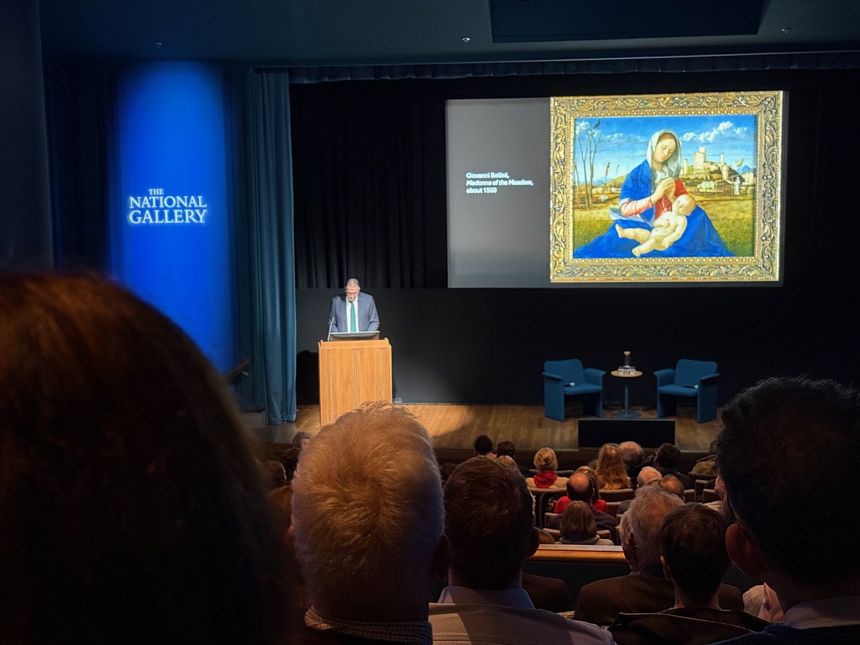
The Government’s announcement therefore felt particularly timely when, earlier this week, I attended the Craigmyle Lecture at the National Gallery, given by Sir Gabriele Finaldi and sponsored by Stone King.
The lecture explored how faith can bring people to art and art can bring people to faith. I was particularly struck by the idea that art can offer moments of transcendence, whether or not we approach it from a position of faith.
It also felt especially poignant because I had recently watched the film adaptation of J. L. Carr’s A Month in the Country. Through the story of a war veteran restoring a medieval wall painting, it quietly explores faith, art, friendship, love and the lasting impact of war. It was fascinating to hear some of those themes echoed in the lecture, including powerful examples of art doing far more than enriching lives and, in some cases, quite literally saving them.
That is, surely, part of the case for keeping our national collections open to all. Free admission does not itself remove every barrier to cultural participation, nor does it resolve the very real financial pressures facing museums. But it preserves the possibility of an encounter: the freedom to enter without having to calculate whether the experience will be “worth” the price, and to find something unexpected once inside.
We cannot know in advance which painting, object or space will reach someone, deepen their understanding, awaken faith, offer comfort or simply allow them to step outside the confines of their own life for a while. Access matters because those encounters matter.
Much of my charity law practice sits at the intersection of faith, art and cultural heritage, so it was a real privilege to attend and to see Stone King support such a thoughtful exploration of the relationship between them. The lecture was a timely reminder that preserving public access to art is not only a question of cultural policy or charity law. It is also about leaving the door open to those “slices of transcendence”, and trusting that people will find their own way through it.
“Our museums are the places that light up the world. They remind us of our shared history and enable us to step outside the confines of our lives.”
Lisa Nandy, Secretary of State for Culture, Media and Sport